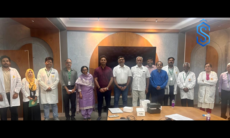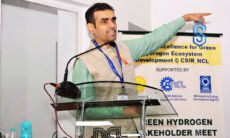


Pune: CSIR–National Chemical Laboratory (CSIR–NCL), Pune, organised a one-day Mini-Symposium titled “WAR Against Antimicrobial Resistance” on 12th December 2025 to mark the global observance of World Antimicrobial Awareness Week (WAAW).
The symposium brought together experts from diverse domains to deliberate on the urgent and multifaceted challenge posed by antimicrobial resistance (AMR), spanning human, animal and environmental health sectors.
Antimicrobial Resistance: Major Global Health Threat
Antimicrobial Resistance (AMR) is a major global health threat, causing an estimated 700,000 deaths annually, with projections reaching 10 million deaths per year by 2050.
The economic burden of AMR could cost the global economy up to $100 trillion USD by 2050, impacting healthcare costs, productivity, and sectors like agriculture.
Also Read: CSIR-NCL Develops Self-Healing Hydrogel Electrolyte for Safer, Flexible Zinc-Metal Batteries
Addressing AMR requires better antibiotic stewardship, enhanced infection control, new drug development, and global collaboration to prevent its escalation and mitigate its devastating effects on health and economies.
This program provided a platform for experts to deliberate on strategies to combat AMR across multiple domains.
The programme opened with a welcome address by the students, followed by an overview of the event delivered by Dr Koteswara Rao, Principal Scientist, CSIR-NCL, Pune.
The opening talk of the day was delivered online by Prof L S Shashidhara (NCBS Bengaluru), who discussed pathogen surveillance in India, drawing valuable insights from the COVID-19 experience and outlining priorities for strengthening national surveillance capacities.
The plenary lecture was delivered by Dr Rajesh Karyakarte (BJMC, Pune) on AMR from the clinician’s angle: Culture to genome and future.
Dr Rajesh Karyakarte, in his plenary lecture, presented a clinician’s perspective on the growing threat of antimicrobial resistance, highlighting its serious implications for patient care and public health.
Drawing from experiences during the COVID-19 pandemic, he explained how hospital wastewater surveillance, undertaken in collaboration with CSIR–NCL, enabled early detection of pathogen variants months before clinical waves emerged, demonstrating the value of surveillance in preventing morbidity and mortality.
He emphasised that hospitals act as critical convergence points for resistant pathogens, making early warning systems and environmental monitoring essential.
Dr. Karyakarte explained the clinical challenges posed by AMR, particularly delays in conventional diagnostic methods that force clinicians to rely on empirical antibiotic therapy in critically ill patients.
He underscored how misuse and overuse of antibiotics accelerate resistance, increasing treatment failures, hospital stays, healthcare costs and mortality. Stressing that antimicrobial resistance affects not just individuals but society at large, he called for responsible antibiotic use, strong antimicrobial stewardship and coordinated surveillance efforts.
He concluded by advocating large-scale hospital wastewater surveillance and broad collaboration among clinicians, researchers, policymakers and institutions to combat antimicrobial resistance effectively.
Also Read: Prof T N Guru Row Highlights Advanced Insights in Noncovalent Bonding at CSIR-NCL Event
The first scientific session, titled Environmental Surveillance, explored AMR in two critical ecosystems—dairy systems and wastewater networks. Dr Dhanasekaran Shanmugam, Chief Scientist, CSIR-NCL, Pune, delivered a talk on “Antimicrobial Resistance in Dairy: what lies beneath!”
He highlighted that how resistance develops and circulates across animals, humans and the environment within the One Health framework. His research focusing on bovine mastitis he explained issues related to animal pathogen surveillance, drug resistance and pathogen transmission via direct contact.
He discussed the challenges in detection and treatment, the presence of resistant bacterial pathogens in milk and the impact of AMR on commonly used antibiotic classes.
He emphasised the importance of systematic surveillance, AMR profiling and appropriate public health measures to mitigate the growing threat of antimicrobial resistance.
Dr Ashish Lele, Director, CSIR-NCL, in his address, welcomed participants to the mini-symposium on antimicrobial resistance, highlighting AMR as a “silent pandemic” with serious health and economic consequences.
He emphasised the close link between climate change and the spread of resistant microbes, noting how environmental changes accelerate AMR through increased infections and antibiotic use. Dr. Lele underscored the importance of the One Health approach, antimicrobial stewardship, and evidence-based prescribing to slow resistance.
He highlighted India’s National Action Plan on AMR 2.0 and the ICMR Antimicrobial Resistance Surveillance Network as key initiatives supporting surveillance and informed policymaking.
Also Read: CSIR-NCL CHT-KIT Enables Instant Detection of Chloral Hydrate Adulteration in Toddy
Citing NCL’s contributions, he noted the laboratory’s role in COVID-19 wastewater surveillance, early detection of variants like Omicron, and ongoing environmental monitoring across wastewater, soil, dairy and poultry systems.
He concluded by stressing the need for coordinated, collaborative efforts among clinicians, researchers, industry and government to tackle AMR effectively.
Following this, Dr Mahesh Dharne, Chief Scientist, CSIR-NCL, Pune, discussed AMR in wastewater, addressing the opportunities and barriers in monitoring, treating and containing resistant microorganisms in municipal and industrial waste streams. The session concluded with a felicitation ceremony and the Director’s Address, which emphasised the need for integrated AMR research efforts.
- Interactive Panel Discussion – 1:
- The session brought together Prof Rajesh Karyakarte (BJ Medical College, Pune), Dr Pradip Awate (NCDC, Delhi), Dr Ankush Parihar (WRDDL, Pune), and Dr Priya Nagaraj (Pune Knowledge Cluster).
- The panel deliberated on interdisciplinary approaches to disease surveillance, emerging infectious diseases, One Health perspectives, and the importance of coordinated action between human health, animal health, and environmental sectors.
The second session focused on Diagnostics, Repositories and Cloud Platforms, showcasing technological advancements and national-level initiatives supporting AMR surveillance and detection.
- Dr Amit Yadav (NCCS, Pune) spoke about the creation of a repository to support India’s AMR mitigation strategies.
- Dr Koteswara Rao (NCL, Pune) presented a highly sensitive aptamer-based biosensing platform designed for the rapid detection of carbapenem-resistant clinical pathogens, highlighting its potential for timely clinical diagnosis and improved antimicrobial stewardship.
- Dr Sunitha Manjari (CDAC, Pune) introduced the ICE CLOUD platform, a cloud-based system aimed at managing AMR-related data and supporting timely decision-making.
- Dr Rajlakshmi Vishwanathan (ICMR–NIV, Pune) shared findings from a community-based surveillance study conducted among livestock farmers in rural Western India.
- Dr Syed Dastager (NCL, Pune) elaborated on the chemical potential of actinomycetes and their relevance in developing new antimicrobial therapies.
Also Read: One Day as A Scientist: CSIR-NCL Fosters Scientific Curiosity in Over 400 Students
- An Interactive Panel Discussion – 2:
- The distinguished panel included Dr Shekhar Mande, former Director General, CSIR and eminent faculty at the Bioinformatics Centre, Savitribai Phule Pune University; Dr Nivedita Gupta, Scientist G and Head, Communicable Diseases Division, ICMR, New Delhi; Dr Ameet Dravid, Chief Consultant, Noble Hospital, Pune; Dr Ashvini Ramekar, Ramekar Diagnostics, Pune; Dr Nikhil Phadke, CEO, Genepath Diagnostics, Pune; and Dr Madhura Panse, Ecosan Services Foundation, Pune.
- The panel discussed advances in bioinformatics, communicable disease research, diagnostics, and clinical translation.
- The session also highlighted the role of innovation and integrated approaches in strengthening disease preparedness and public health response.
Panellists collectively stressed that AMR is a One Health challenge that requires sustained, multi-dimensional and multi-sectoral action.
- Final Session of the Day
- The session centered on Therapeutics, highlighted next-generation approaches to countering antimicrobial resistance.
- Dr Harinath Chakrapani (IISER Pune) provided a chemical biology perspective on AMR, discussing medicinal chemistry strategies that could pave the way for innovative drug designs.
- Dr Santosh Koratkar (Symbiosis International University, Pune) presented insights into bacteriophage therapy, stressing its renewed relevance as a sustainable and powerful alternative to antibiotics.
- The session concluded with valedictory remarks delivered by Dr Mahesh Dharne (CSIR-NCL, Pune).
The Mini-Symposium served as a dynamic platform for exchanging knowledge, showcasing technological advancements and strengthening collaborative efforts to combat antimicrobial resistance. Through this event, CSIR–NCL reinforced the global call to action: “Act Now – Protect Our Present, Secure Our Future.”